

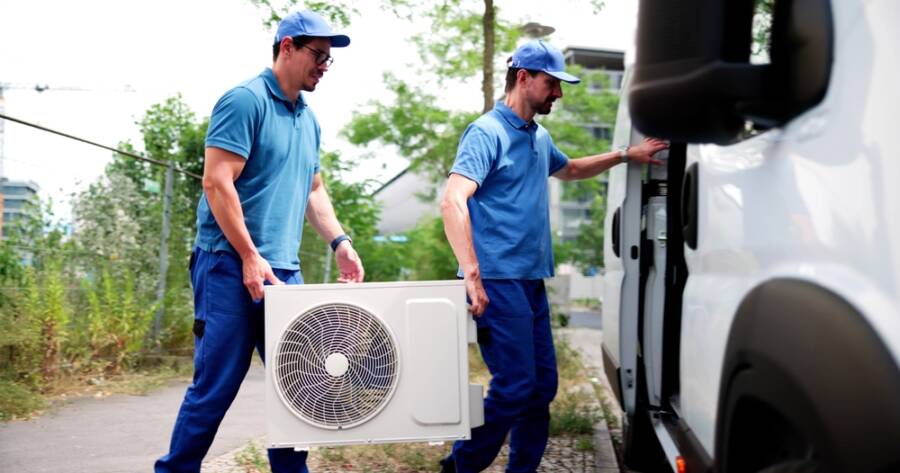
HVAC delivery drivers play a crucial role in the heating, ventilation, and air conditioning industry by ensuring the timely and safe transportation of essential equipment to various sites. Their responsibilities demand excellent driving skills, logistical planning, and customer service. As the industry grows, becoming an HVAC delivery driver promises a stable career path with numerous benefits and opportunities.
What are HVAC Delivery Drivers?
HVAC delivery drivers are pivotal players in the heating, ventilation, and air conditioning industry. They are responsible for transporting essential equipment such as air conditioners, furnaces, ductwork, and other vital components to construction sites and repair shops. This role ensures that HVAC systems, which are crucial for maintaining comfortable and energy-efficient indoor environments, reach their destinations safely and on time. This responsibility demands prompt delivery of equipment, often integrating with construction timelines or emergency repair needs.
Key Responsibilities of an HVAC Delivery Driver
At the heart of the role, HVAC delivery drivers are tasked with ensuring the safe operation of company vehicles to carry equipment and supplies to various assigned locations. Key duties involve planning and organizing daily delivery routes to maximize efficiency, securely loading and unloading trucks with attention to fragile items, and verifying delivery contents against invoices to ensure accuracy and customer satisfaction in the delivery process.
Besides logistical tasks, these drivers play an essential part in maintaining records of deliveries, providing invaluable data for inventory management and customer service. Occasionally, drivers may assist in inventory management and the preparation of materials for installations to support warehouse operations.
Required Skills and Qualifications
To succeed in this occupation, safe driving is paramount; candidates must possess an excellent driving record, often necessitating a clean driver’s license and occasionally a Commercial Driver’s License (CDL) for larger vehicles to enhance employment prospects. An understanding of basic mechanical knowledge of HVAC parts can further benefit delivery drivers as it aids in troubleshooting and efficient delivery.
Physical strength and endurance are also critical due to the frequent handling of heavy equipment, requiring the ability to lift between 50 to 100 pounds regularly. Effective navigation skills enhance a driver’s capacity to plan routes, ensuring on-time deliveries even in the face of unforeseen obstacles. Moreover, these drivers must have strong customer service skills as they interact directly with clients, enhancing the company’s reputation and service quality through effective communication.
Typical Work Environment and Conditions
The role of an HVAC delivery driver often demands full-time commitment, encompassing early starts, multiple daily stops, and exposure to various weather conditions. Drivers become well-acquainted with navigating diverse environments including construction sites, residences, and commercial premises, emphasizing the road independence and job satisfaction from ensuring operational HVAC systems.
While physical demands are notable, the benefits align well with the HVAC industry’s growth. Salaries average from $35,000 to $55,000 per year, with potential overtime and bonus opportunities, reflecting the high demand due to continuous construction and climate control needs for skilled drivers.
Pathway to Becoming an HVAC Delivery Driver
Prospective HVAC delivery drivers typically start by completing high school or a GED, followed by obtaining a valid driver’s license. Experience in delivery or warehousing roles proves advantageous, along with considering a CDL for larger vehicle operations.
On-the-job training is critical, generally covering areas such as safe material handling, operating forklifts, understanding product types, and following safety and Department of Transportation (DOT) regulations which govern the role. Furthermore, continuous learning about HVAC systems can significantly bolster career advancement opportunities by providing foundational knowledge that is directly applicable to the job.
Why You Should Learn More About HVAC Delivery Driver Roles Today
The growing demand for HVAC delivery drivers makes it an appealing career choice for those who enjoy dynamic work environments and driving. It offers a stable career path with opportunities for overtime and benefits, heightened by the increasing demand for climate control solutions. Exploring this role can lead to a satisfying occupation by combining driving skills with customer service and logistics, contributing significantly to the broader HVAC industry by maintaining systems critical to comfort and efficiency.